
Our Models - The Saints
Saint Elijah the Prophet, Spiritual Founder, 9th Century B.C. Palestine
Saint Teresa of Jesus, Doctor of the Church, 1515-1582 Spain
Saint John of the Cross, Doctor of the Church, 1542-1591 Spain
Saint Thérèse of the Child Jesus and the Holy Face, Doctor of the Church,
1873-1897 FranceSaint Elizabeth of the Trinity, Spiritual Guide, 1880-1906 France
Saint Teresa Benedicta of the Cross, Martyr, 1891-1942 Germany
Saint Teresa of the Andes, Patroness of Youth, 1900-1920 Chile
Carmelite Charism
Who or What is a Carmelite?
Carmelite Prayer
Our Models - The Saints
Our History
Devotions
The Blessed Virgin Mary, Queen of Carmel
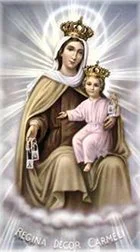
Carmel is all Mary's. One could also say that Carmelite nuns are all Marys. From the Mother of Jesus, we learn to ponder the Word of God in our hearts. As she was the first and most perfect disciple of Christ, we follow Him by following her. Like her, we let ourselves be overshadowed by the Spirit of God who forms Christ in our souls. With Mary, we contemplate the mysteries of salvation and so put on the mind of Christ. Wearing Mary's habit reminds us that she is our Mother and that we, too, are called to be mothers of souls through our apostolic prayer.
Saint Joseph, Protector of Carmel
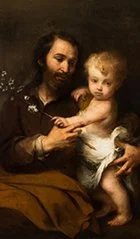
Did you know that the Carmelites are the great promoters of devotion to Saint Joseph? Saint Teresa named her first monastery after him, and most of the present-day carmels, including our own, have the religious title Carmel of Saint Joseph. (We also go by Carmel of Port Tobacco because of our location.) As Saint Joseph protected and provided for Mary and Jesus in this life, he continues that mission for the Church, the Body of Christ, and for Mary's Order, the Carmelites. From him we learn that silence is so necessary for prayer. Saint Teresa also recommended that we ask Saint Joseph to teach us to pray, and, if we have no spiritual director, to ask him to be one for us. Here in Carmel, whenever anything breaks down or we need groceries, good Saint Joseph is the first person we turn to for help.
Saint Elijah the Prophet, Spiritual Founder, 9th Century B.C. Palestine
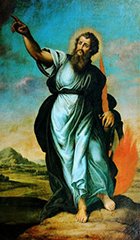
Carmel claims a long tradition that begins even before Christ. As we read in the Book of Kings in the Bible, Elijah the Prophet was the founder of a community of prophets centered on Mount Carmel in the Holy Land. By the late 12th Century A.D. some hermits had settled there, but archaeological evidence takes us back even farther. There was a chapel said to be the first dedicated to the Mother of God and to the Nativity of Jesus. It is from Saint Elijah that we develop a zeal for God's honor and live the radical life that is a prophetic witness to our times. We trust God to feed us in the desert as we listen for that still, small voice that is God's. Read more
Saint Teresa of Jesus, Doctor of the Church, 1515-1582 Spain
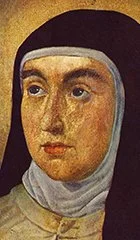
To Our Holy Mother, Saint Teresa of Jesus, belongs the glory of renewing the spirit of Carmel. Returning to our roots in the example of Elijah and the hermits of Mount Carmel, she formulated a way of living that would foster prayer, sisterly support, and a deep friendship with Jesus, our Bridegroom. Her monasteries would have few nuns and few needs. Her practical mysticism inspires us to seek the things that are above while keeping our feet firmly on the earth. Read more
“Detachment, if practiced perfectly, includes the other two necessary virtues, love of others and true humility.”
Saint John of the Cross, Doctor of the Church, 1542-1591 Spain
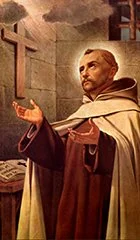
This saint, when associated only with the Dark Night of the Soul, can be easily misunderstood. He is also one of the greatest poets who ever lived. In addition, you might find him dancing at Christmas or designing an aqueduct. Saint Teresa knew his worth. He was persecuted for helping her to the point of being imprisoned and scourged for months until he made a daring escape – at night, appropriately. At his feet, we learn to embrace our crosses, knowing that the Resurrection lies hidden in them. If we meet the One Who loves us like a Bridegroom on Calvary, we will dance with Him at Easter. Read more
Saint Thérèse of the Child Jesus and the Holy Face, Doctor of the Church, 1873-1897 France
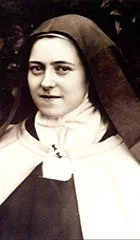
How did a twenty-four-year-old woman become a Doctor of the Church and Patroness of the Missions without ever going to university or to any mission country? By being as helpless as a child and as totally confident of her Heavenly Father’s love, daring enough to ask Him for everything, knowing she had nothing. She teaches us this great confidence and gives us the hope beyond hope that God wishes to do the same for us. Each of us can become a saint. All we have to do is become like a little child. Read more
Saint Elizabeth of the Trinity, Spiritual Guide, 1880-1906 France
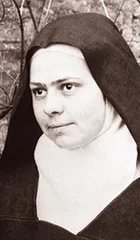
Have you ever stood before something so beautiful that it left you speechless? This was the interior life of another young saint. She gave up a promising career as a concert pianist to give herself completely to the adoration of the ineffable Godhead. The life of the Holy Trinity captivated her and amazed her. The only appropriate response was silence before such a mystery. She has not left us without directions to this beauty. They can be found in her writings, but most of all in her attitude towards the Sacred. Silence is prized in Carmel. May she teach us the interior quiet that we also need.
Read more
Saint Teresa Benedicta of the Cross, Martyr, 1891-1942 Germany
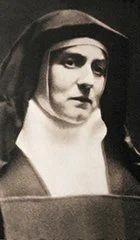
If you have ever been told that Carmel is anti-intellectual, Edith Stein will prove that wrong. Her search for truth took her through the heady atmosphere of philosophic circles and an emerging feminism to Catholicism and eventually to Carmel. There she published, among other works, The Science of the Cross. She knew that there was in Christ a truth higher than any philosophy. She was strengthened by it to die for it, and die she did - at Auschwitz. Saint John Paul II has pointed us to her in these modern times by naming her a Co-Patroness of Europe, knowing that her example and doctrine have much in them to transform and Christianize our culture. Read more
Saint Teresa of the Andes, Patroness of Youth, 1900-1920 Chile
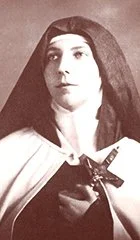
It has been said of this unlikely saint that the television series of her life was longer than her life itself. Dying at the age of 19 and almost completely unknown except to family and friends, the Holy Spirit immediately began to draw young people to the grave of this teenager. Nothing can explain this except pure grace. Her posthumous writings reveal the intimate friendship that she had with Our Lord Jesus Christ. Like a quiet nuclear reactor that shows nothing of the power within, she took with her to Carmel a spiritual energy that, when released by death, transformed her country. Now that we have come to know of her, may we, too, be transformed by her total giving of herself and her exuberant joy. Read more